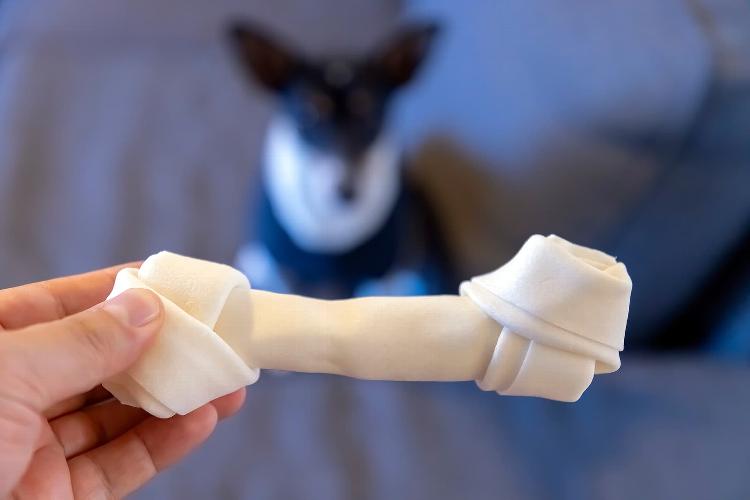
You won't find rawhide at Bark & Bramble.
That's not an accident and it's not because we're trying to scare owners into buying something else.
It's simply a product category we've looked at and decided we don't need to stock when there are alternatives we'd rather give our own dogs.
At Bark & Bramble, our position is simple:
Never any rawhide.
What Actually Is Rawhide?
Despite the name, rawhide isn't simply a piece of dried meat.
Rawhide chews are made from animal hide, commonly cattle hide, which is bleached, chemically treated and coloured/flavoured before being turned into the familiar rolls, twists and bone-shaped chews found in pet shops.
Different rawhide products can be manufactured and processed differently, so it wouldn't be accurate to suggest that every piece of rawhide is exactly the same.
But fundamentally, you're giving your dog processed animal skin to chew rather than a meat-based treat.
And for us, there are alternatives we would simply rather choose.
Why Are We Cautious About Rawhide?
One of our main concerns is what can happen as a dog chews it.
Rawhide can soften during chewing and some dogs may tear off and swallow larger pieces.
Those pieces can present a choking risk or potentially cause a gastrointestinal obstruction if swallowed.
This risk isn't identical for every dog.
A gentle chewer that slowly works away at a correctly sized rawhide is very different from a powerful dog that tears large chunks off within minutes.
But that's exactly the point.
If there are other chews we'd rather offer, why would we choose rawhide?
Can Dogs Digest Rawhide?
Another reason we're not particularly enthusiastic about rawhide is digestibility.
Rawhide isn't the same as a piece of dried meat. Its heavy processing means that larger swallowed pieces may not break down easily within the digestive system.
Again, that doesn't mean every dog given rawhide will experience an obstruction.
Plenty of dogs have eaten rawhide without experiencing a problem.
But at Bark & Bramble, our product selection isn't based on:
“Will most dogs probably be fine?”
We ask:
“Is this something we're genuinely happy recommending when alternatives are available?”
With rawhide, our answer is no.
Does Rawhide Clean Dogs' Teeth?
This is where we need to be fair.
Chewing can provide mechanical abrasion and some specifically designed rawhide-based dental products have evidence supporting plaque or tartar control.
So we wouldn't claim that rawhide has no potential dental benefit.
But that doesn't change our decision.
The natural chews we stock can also help support dental hygiene through the mechanical action of chewing. As your dog gnaws and chews, this action can help clean the surface of the teeth and reduce plaque build-up.
Products such as appropriately sized beef skin, rabbit ears and other natural chews can therefore provide your dog with an enjoyable chewing experience while also helping to support their dental hygiene.
For us, that means we don't need to rely on rawhide to provide the benefits associated with chewing when there are natural alternatives we'd much rather give our own dogs.
Chews shouldn't replace proper dental care, however. Regular tooth brushing with an appropriate canine toothpaste remains one of the most effective ways to look after your dog's teeth and gums.
Rawhide may offer some dental benefit, but we believe there are better natural alternatives that we consider a safer choice when appropriately selected, sized and supervised. That's why you'll never find rawhide at Bark & Bramble
What Are The Alternatives To Rawhide For Dogs?
We prefer carefully selected natural dog treats and chews with clearly identified ingredients.
Depending on the individual dog, that might include products such as:
- Rabbit ears
- Beef skin
- Pizzle
- Natural sausages
- Tendons
- Other appropriately sized natural chews
We particularly like products where you can pick up the packet, turn it over and clearly understand what you're giving your dog.
For example:
100% Rabbit.
That's the sort of transparency we like.
But “Natural” Doesn't Mean Risk-Free
This is really important.
We're not going to tell you that natural chews are completely safe simply because we sell them.
No edible chew is completely risk-free.
Dogs can swallow pieces of chews. Inappropriate chews can present choking or gastrointestinal risks, and very hard chews can potentially damage teeth.
That's why the right chew depends on your dog's:
- Size
- Age
- Dental health
- Chewing strength
- Chewing style
Dogs should also be supervised while enjoying chews, with products removed if they become small enough to swallow whole or begin breaking into inappropriate pieces.
Choosing an alternative to rawhide doesn't mean supervision suddenly stops mattering.
Why “Never Any Rawhide” Matters To Bark & Bramble
Our product philosophy isn't about stocking everything we possibly can.
It's almost the opposite.
We'd rather have a smaller range of products we're comfortable putting our name behind.
Could some dogs chew rawhide throughout their lives without experiencing a problem?
Absolutely.
But when there are natural alternatives with clearly identified ingredients that we'd personally rather give Winston, we don't see a reason to put rawhide on our shelves.
That's why Bark & Bramble is:
Never Any Rawhide.
Not because we're interested in fear-based marketing.
Not because every piece of rawhide is guaranteed to cause harm.
But because “probably fine” isn't the standard we want to use when choosing products for our dogs.
We want to know what we're giving them.
We want to understand the ingredients.
And we want products we'd be comfortable taking home and giving to Winston ourselves.
That's our standard.
better nutrition + transparency + pets deserving better
No dog chew is completely risk-free. Always choose an appropriately sized chew for your dog's age, size, dental health and chewing style, supervise chewing and provide access to fresh water. Seek veterinary attention if your dog experiences choking, repeated vomiting, abdominal pain, difficulty passing stools or other concerning symptoms.
